
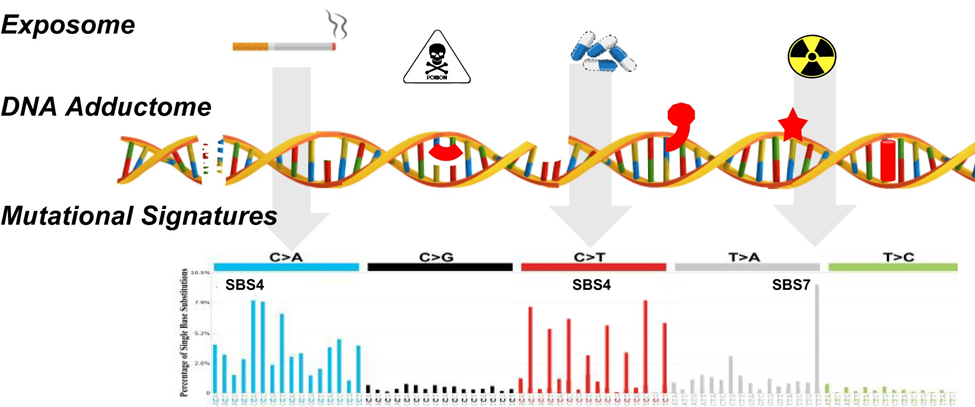
Dr. Gunnar Boysen’s latest article “Investigating the origins of the mutational signatures in cancer” appears in Nucleic Acids Research, Volume 53, Issue 1, published this month. The abstract is below:
Most of the risk factors associated with chronic and complex diseases, such as cancer, stem from exogenous and endogenous exposures experienced throughout an individual’s life, collectively known as the exposome. These exposures can modify DNA, which can subsequently lead to the somatic mutations found in all normal and tumor tissues. Understanding the precise origins of specific somatic mutations has been challenging due to multitude of DNA adducts (i.e. the DNA adductome) and their diverse positions within the genome. Thus far, this limitation has prevented researchers from precisely linking exposures to DNA adducts and DNA adducts to subsequent mutational outcomes. Indeed, many common mutations observed in human cancers appear to originate from error-prone endogenous processes. Consequently, it remains unclear whether these mutations result from exposure-induced DNA adducts, or arise indirectly from endogenous processes or are a combination of both. In this review, we summarize approaches that aim to bridge our understanding of the mechanism by which exposure leads to DNA damage and then to mutation and highlight some of the remaining challenges and shortcomings to fully supporting this paradigm. We emphasize the need to integrate cellular DNA adductomics, long read-based mapping, single-molecule duplex sequencing of native DNA molecules and advanced computational analysis. This proposed holistic approach aims to unveil the causal connections between key DNA modifications and the mutational landscape, whether they originate from external exposures, internal processes or a combination of both, thereby addressing key questions in cancer biology.
The article can be found here: https://doi.org/10.1093/nar/gkae1303